Showing posts with label Erich Wolfgang Korngold. Show all posts

Monday, 10 October 2022

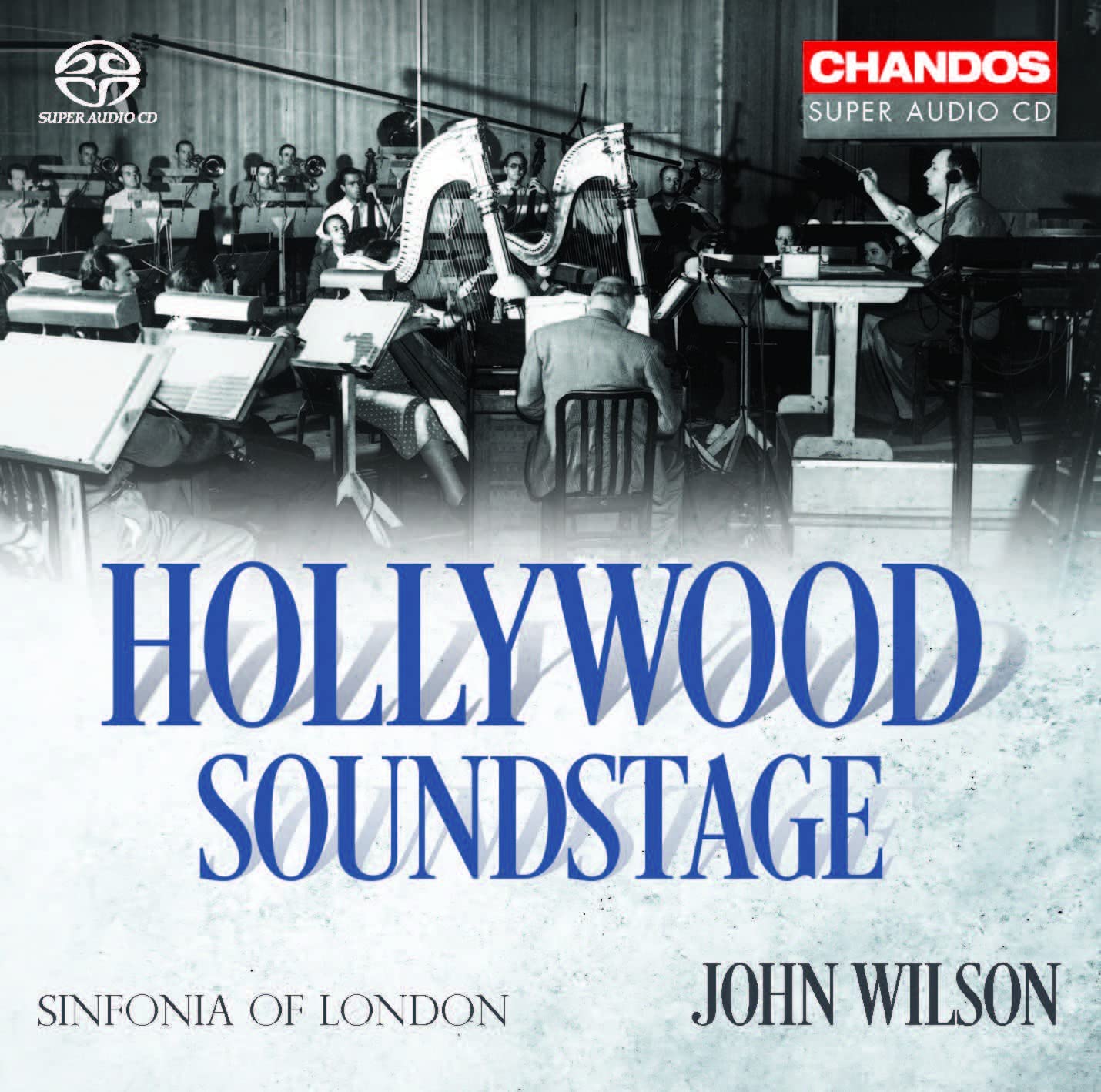
Review: "Hollywood Soundstage"; John Wilson and the Sinfonia of London.

(Hollywood Soundstage, available on SACD from Chandos Records.)

Since 1994 the John Wilson Orchestra, with British conductor John Wilson at the helm, has become renowned throughout the world for their performances of music from the golden age of Hollywood and Broadway. In 2018, Wilson shifted focus and reestablished one of the most iconic orchestras in UK, the Sinfonia of London. The orchestra is best remembered for being on many great movie soundtracks, from “North by Northwest” to “The Snowman”. For this latest album, released in September on Chandos, John Wilson returns to the Golden Age of Hollywood.

The album begins with Erich Wolfgang Korngold’s stirring overture from “The Private Lives of Elizabeth and Essex” (1939). The piece consists of the typical Korngold fingerprints, such as regal and swashbuckling themes.

This is followed by David Raksin’s theme from “Laura” (1944), a piece which I think sounds ahead of its time. This recording features a superb trombone solo from Andy Wood and the piece consists of some wonderfully written variations on the main theme.

The next piece is the “Wizard of Oz” suite (1939), which consists of melodies from Harold Arlen’s songs as well as Herbert Stothart’s incidental music. It immediately transports you to those vibrant technicolour images in the MGM film directed by Victor Fleming, who also directed “Gone With The Wind”. The A-flat bicycle bell of Almira Gulch (a.k.a. the Wicked Witch of the West) makes an appearance.

Next is Frederick Loewe’s composition for both the stage (1956) and film (1964) versions of “My Fair Lady”. The film version of his “Transylvanian March” and “Embassy Waltz” is orchestrated by Alexander Courage, who is well known for writing the original Star Trek theme as well as orchestrating the film scores of composers like John Williams and Jerry Goldsmith.

Next is a suite from Max Steiner’s music to “Now, Voyager” (1942), which conductor John Wilson has arranged himself. I first heard performed live by the John Wilson Orchestra at the 2019 BBC Proms.

The next piece composed by Johnny Mandel is the main title from “The Sandpiper” (1965). Mandel is best remembered for composing the song “Suicide is Painless” (1970), the theme from “M*A*S*H”. The theme from the “Sandpiper”, also known as “The Shadow of Your Smile” features a brilliant trumpet solo perform by Mike Lovatt, former principal trumpet player of the John Wilson Orchestra.

Next is Franz Waxman’s suite from “Rebecca”, which was an Alfred Hitchcock film from 1940, his first American project. The score made use of two Novachords which was a form of early electronic instrument not dissimilar to a synthesiser. To recreate the sound on this track, Wilson uses modern keyboard instruments.

Finally, the street scene from “How to Marry a Millionaire” (1953) is Alfred Newman’s homage to Gershwin. I also think it also has traces of Charlie Chaplin’s score for “Modern Times” (1936), which Newman conducted and which David Raksin arranged with Edward Powell.

This SACD should be in the collections of all music lovers, even those are not keen on film scores. Also, I particularly like the brass playing on this album. The only criticism is… there should be more!

Acknowledgements…

Presto Music Classical Podcast: https://www.prestomusic.com/classical/articles/4858--presto-music-classical-podcast-episode-30-music-from-the-golden-age-of-hollywood-with-john-wilson
Chandos Records: https://www.chandos.net/products/catalogue/CHAN%205294
Sinfonia of London: https://sinfoniaoflondon.com
John Wilson: https://johnwilsonconductor.com

Thursday, 9 September 2021

BBC Proms 2021: John Wilson and the Sinfonia of London.

Last Saturday I had the opportunity to meet one of my idols, the conductor, John Wilson. I attended the BBC Proms at the Royal Albert Hall, in London. John Wilson and his new orchestra, the Sinfonia of London, were performing works by mainly Austrian composers. The highlight of the concert for me, was the “Symphony in F sharp” by Erich Wolfgang Korngold, who was from the Viennese School of Composers, and studied under Richard Strauss and Alexander von Zemlinsky. He made a name for himself scoring many golden-age Hollywood films, such as “Captain Blood” (1935) and “The Adventures of Robin Hood” (1938) both starring Errol Flynn.

John Wilson.

The first half opened with the overture from “Der Fledermaus” by Johann Strauss II. Like a lot of well known compositions, you may know what it sounds like, but not what it’s called. That was the case with me. I knew it as the music that accompanied “Tom and Jerry at the Hollywood Bowl” and crashing cars during the opening of Disney’s “The Love Bug“. The operetta the overture was written for, was based on a play entitled “the prison“ by Roderich Benedix.

Strauss’s overture was followed by “Seven Early Songs“ by Alban Berg, and sung wonderfully by soprano Francesca Chiejina. The songs were originally written over three years from 1905 to 1908, but were not orchestrated by the composer until 1928.

Francesca Chiejina.

This was followed by Ravel’s “La Valse”, a piece described as a tribute to the Viennese waltz. At first I thought it was Strauss, but the seemingly chaotic tones and rhythms at the end are said to reflect the descent of Vienna after the Great War.

The Korngold “Symphony in F Sharp” is a piece I have never heard in full. The symphony began with a quiet and mysterious passage, played on percussion with pizzicato strings and piano. Then, as the peace progressed, it started to sound more cinematic. At various points I was reminded of the scores from “Jaws” and “Indiana Jones”. It seems to me (and has also been commented on by others) that John Williams was influenced by Korngold. It’s my loss, but the only pieces of Korngold that I am familiar with are his “Theme and Variations” and, of course, his film scores.

The concert wound up with a piece by Korngold’s teacher, Zemlinsky, as the deserved encore, a piece that predates film scores but sounded, for all the world, just like one.

I, myself, am passionate about film music, and this is how I became familiar with John Wilson’s work, as he is often associated with music from the stage and screen. In fact I attended this particular Prom because I am familiar with film music history and how it has its roots in the music played at this concert. I imagine that John Wilson chose these pieces because he wanted to show what preceded Hollywood film scoring, to enable the audience to understand the evolution of golden-age film music.

John Wilson (with mask on) after the concert.

Autographs from John Wilson (large signature on right) and members of the Sinfonia of London.


I very much enjoyed the concert and felt so lucky to be able to have a short discussion with John as he left the Albert Hall. His parting words to me were, “Study the music you enjoy!” Wise words indeed.

Watch the full concert on BBC iPlayer: https://bbc.in/3tGu6MF
Listen on BBC Sounds: https://bbc.in/3nhkwOO

Review: Intrada’s NEW recording of “The Chairman”; Music by Jerry Goldsmith

(Album artwork by  Stéphane Coëdel) The team that is Leigh Phillips, William Stromberg, Intrada Records and the Royal Scottish National Orch...