Showing posts with label Film music. Show all posts

Thursday, 25 December 2025

Review: Intrada’s NEW recording of “The Chairman”; Music by Jerry Goldsmith


(Album artwork by Stéphane Coëdel)

The team that is Leigh Phillips, William Stromberg, Intrada Records and the Royal Scottish National Orchestra have done it again! This time with a new Kickstarter-funded recording of Jerry Goldsmith’s score for the 1969 thriller “The Chairman” (AKA “The Most Dangerous Man in The World”). The film starred Gregory Peck, was mostly made in the United Kingdom and directed by British director J. Lee Thompson.

Goldsmith’s music is one of several projects of his that had far-eastern settings. He was a tremendous composer for percussion and one who really liked to experiment. Even to the point of using dried rice on a bass drum on the opening title cue. The reasons for this new recording are that the original master tapes no longer exist and that the original album is incomplete and only on vinyl (not including digital rips).

In July of this year, a few weeks before the recording sessions took place, I met up with score reconstructor and producer Leigh Phillips in Prague. He was able to give me an insight into the unique instrumentation of “The Chairman” score. He said that on receiving the original charts, orchestrated by Gary Hughes, there was not much specific information about percussion, despite requiring a lot of it. That was when Leigh’s incredible listening skills came in, ensuring that the reconstruction and interpretation honoured the film's original soundtrack.


(Leigh Phillips [left] with me in Prague, July 2025.)

The recording has been lovingly made with painstaking care. With the exception of two minor overdubbed parts, all of the players are together in the same space at the Royal Concert Hall in Glasgow.

With the “Main Title” music the listener is immediately immersed in a Chinese-influenced soundscape through the extensive and experimental use of percussion, as well as cimbalom, banjo and mandolin. In addition to sounding Chinese, I believe that the cimbalom adds an element of Cold War paranoia throughout the score - remember "The Ipcress File"? Probably my favourite of all the cues is “The Russians Are Coming", heard at the climax of the film. Its virtuoso use of the Almglocken (tuned cowbells) is like nothing else and pure Goldsmith.

“The World Only Lovers See” (love theme) features a wonderfully simple and romantic piano solo. Originally Jerry Goldsmith himself played the solo on the original album, however on this occasion it was performed by the pianist of the RSNO, Lynda Cochrane. Maestro Stromberg later remarked that her playing was, in his view, better than that of Goldsmith.

In addition to "The Chairman" score, the team were able to record some bonus cues from other films, thanks to extra money raised as part of the crowdfunding. These included the end credit music from “Rambo II” and a cue called “Alex’s Death” from “Under Fire”. The penultimate track on the album is a grand and majestic piece, “The Flag” from “Not Without My Daughter”. 

The final track, is a new realisation from Leigh Phillips of an unused piece. It was composed by Goldsmith for “The Game of Their Lives”, shortly before his death in 2004. I’m sure Goldsmith would have been proud of Leigh’s arrangement. Leigh has even produced a video on how he did it.

Once again, the Intrada team have achieved immaculate results that all music lovers really ought to hear and they have already announced their next Kickstarter recording project, which is going to be "The Night of The Hunter”. Music by Walter Schumann.


A very Merry Christmas and a very Happy New Year to everyone!!!


Buy the CD: Here.

Kickstarter page: Here.


Sunday, 19 November 2023

Review: John Wilson and his Sinfonia of London at Bridgewater Hall, Manchester (15/11/2023).


Once again, legendary British conductor John Wilson has been on tour presenting some of the greatest hits of Hollywood, with renowned singers Kim Criswell, Matt Ford and Jamie Parker. The orchestra was Wilson’s own Sinfonia of London re-established by him in 2018.


The concert at Manchester’s Bridgewater Hall, opened with the MGM Jubilee Overture which was arranged in 1954 by the studio’s musical director, Johnny Green. This instrumental medley features numerous MGM numbers such as Singin’ in the Rain, I’ve Got You Under My Skin, Over the Rainbow and The Trolley Song. Having heard the original recording of it as well as John Wilson's recording, Wilson conducted a little bit faster in places on this occasion. In my opinion this does not ruin the piece. On the contrary I think it helps to drive it along and works remarkably well in concert.


Kim Criswell and Matt Ford flawlessly delivered Cole Porter’s Stereophonic Sound from 1957’s Silk Stockings. Having recently sung this song with a friend at Dartington summer school, back in August, I can confirm that it is not the easiest song to perform. Matt Ford then left the stage and Kim Criswell then gave us a haunting and very emotional solo performance of Secret Love, that was originally performed by Doris Day in Calamity Jane. The Heather on the Hill from Brigadoon is a great example, not only of fine music and lyrics going together, but also of great arranging. The song was written for the film by Lerner and Lowe and was arranged by Conrad Salinger. Actor and singer, Jamie Parker performed the vocal refrain. His performance was nice and gentle, this contrasted with the ballet music that Salinger had arranged.


Another instrumental piece, was the overture from High Society, arranged from Cole Porter’s songs for the film by Conrad Salinger and Lloyd ‘Skip’ Martin. John Wilson conducted lightly and with finesse and the orchestra gave the music the articulation and colour that it needed. For me the highlight of the first half, was Matt Ford's performance of Pure Imagination, from Willy Wonka and the Chocolate Factory, in its original arrangement by Walter Scharf. As a fan of the film and its music I was paying particular attention to this performance, and I think it was electrifying.


Kim Criswell concluded the first half with I Got Rhythm from Girl Crazy. During the instrumental part, the audience applauded different sections of the orchestra as if they were jazz players, even the violins and violas, who stood up and gave us a spine-tingling virtuoso performance.


The second half began with the main title music from Singin’ in the Rain, this involved all three vocalists, who sang the first verse of the title song whilst walking across the stage. It was immediately followed by Good Morning. Both pieces were perfect representatives of such a film.


One rarity that was played, was the Jerry Herman ballad Love is Only Love written for the film version of Hello Dolly! and was originally performed by the star of the film, Barbra Streisand. Kim Criswell has an extraordinary ability to channel the great leading ladies of Hollywood and Broadway, including Streisand. Another glorious rarity was the original Irwin Kostal arrangement of Jolly Holiday from Mary Poppins, complete with members of the orchestra playing kazoos during the Penguin dance sequence.


Matt Ford gave a wonderful and moving performance of If ever I would leave you from Camelot and I think John Wilson was right to call it one of Frederick Lowe’s finest ballads. Jamie Parker’s rendition of I’ve Grown Accustomed to Her Face from My Fair Lady, may not have been an imitation of Rex Harrison, but he certainly was able to channel him. Learning all those words for such dramatic number must have been a huge challenge.


The penultimate piece of the evening was the unofficial Hollywood anthem That's Entertainment from 1953’s The Band Wagon. I could not help mouthing along to this number, knowing every word of it. The encore which brought the evening and the tour to an end was There's No Business Like Show Business, originally from Annie Get Your Gun. I am unfamiliar with the arrangement that was performed. But Kim, Matt and Jamie did splendidly with Kim taking the lead with here spot on Ethel Merman imitation.


I believe that this was a glorious performance as well as a wonderful end to a national tour. I sincerely hope that John Wilson and the team embark on another one next year. Also, I wonder if there’s any chance in the future of such a show returning to the proms.

Friday, 15 September 2023

Podcast: In Conversation With Matti Bye

In this episode, I speak to Swedish composer and silent film accompanist Matti Bye, about the scores that he has written for both silent and contemporary films. The interview was recorded in June, at the 2023 Il Cinema Ritrovato festival in Bologna, Italy.

Monday, 10 October 2022

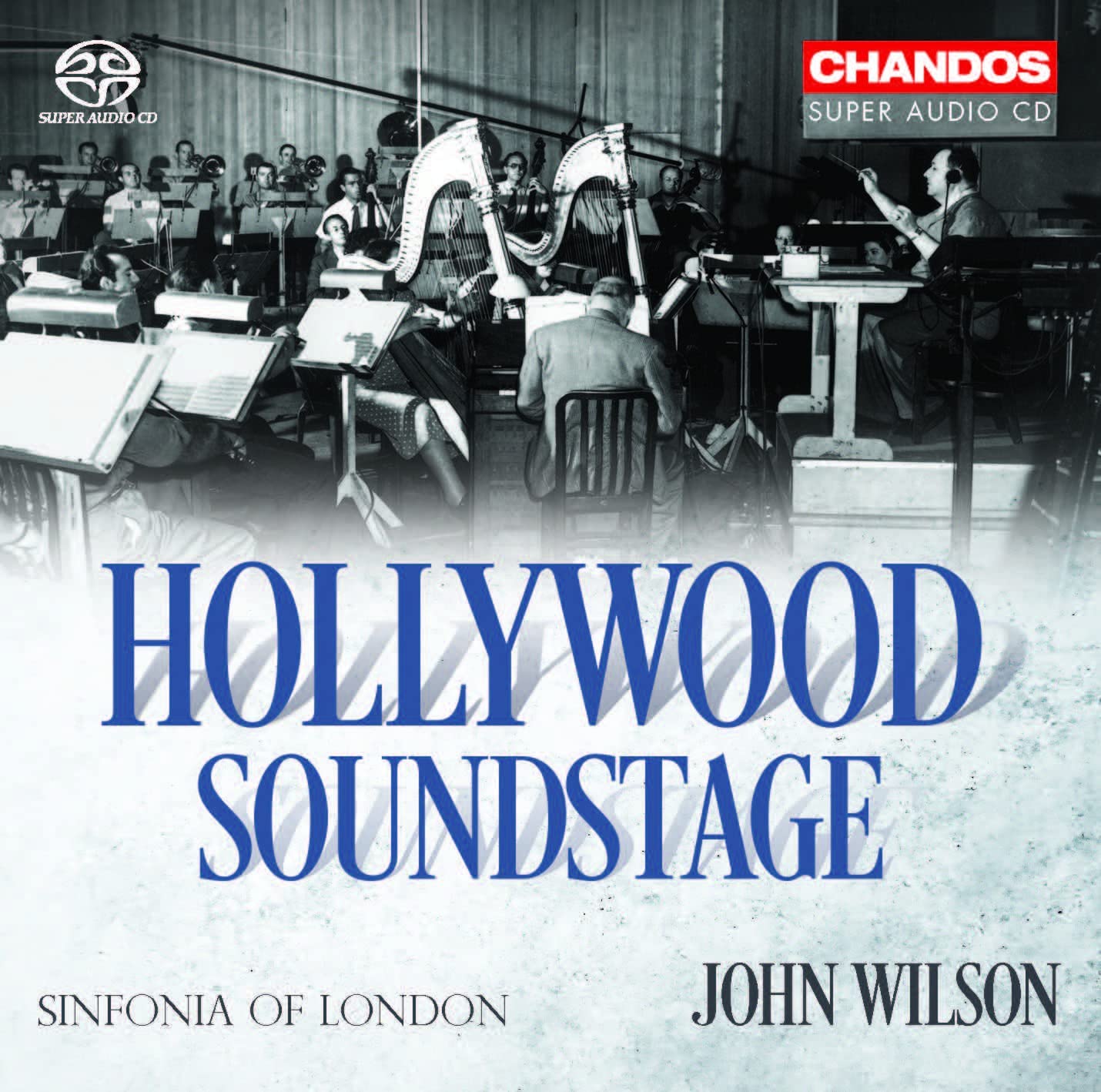
Review: "Hollywood Soundstage"; John Wilson and the Sinfonia of London.

(Hollywood Soundstage, available on SACD from Chandos Records.)

Since 1994 the John Wilson Orchestra, with British conductor John Wilson at the helm, has become renowned throughout the world for their performances of music from the golden age of Hollywood and Broadway. In 2018, Wilson shifted focus and reestablished one of the most iconic orchestras in UK, the Sinfonia of London. The orchestra is best remembered for being on many great movie soundtracks, from “North by Northwest” to “The Snowman”. For this latest album, released in September on Chandos, John Wilson returns to the Golden Age of Hollywood.

The album begins with Erich Wolfgang Korngold’s stirring overture from “The Private Lives of Elizabeth and Essex” (1939). The piece consists of the typical Korngold fingerprints, such as regal and swashbuckling themes.

This is followed by David Raksin’s theme from “Laura” (1944), a piece which I think sounds ahead of its time. This recording features a superb trombone solo from Andy Wood and the piece consists of some wonderfully written variations on the main theme.

The next piece is the “Wizard of Oz” suite (1939), which consists of melodies from Harold Arlen’s songs as well as Herbert Stothart’s incidental music. It immediately transports you to those vibrant technicolour images in the MGM film directed by Victor Fleming, who also directed “Gone With The Wind”. The A-flat bicycle bell of Almira Gulch (a.k.a. the Wicked Witch of the West) makes an appearance.

Next is Frederick Loewe’s composition for both the stage (1956) and film (1964) versions of “My Fair Lady”. The film version of his “Transylvanian March” and “Embassy Waltz” is orchestrated by Alexander Courage, who is well known for writing the original Star Trek theme as well as orchestrating the film scores of composers like John Williams and Jerry Goldsmith.

Next is a suite from Max Steiner’s music to “Now, Voyager” (1942), which conductor John Wilson has arranged himself. I first heard performed live by the John Wilson Orchestra at the 2019 BBC Proms.

The next piece composed by Johnny Mandel is the main title from “The Sandpiper” (1965). Mandel is best remembered for composing the song “Suicide is Painless” (1970), the theme from “M*A*S*H”. The theme from the “Sandpiper”, also known as “The Shadow of Your Smile” features a brilliant trumpet solo perform by Mike Lovatt, former principal trumpet player of the John Wilson Orchestra.

Next is Franz Waxman’s suite from “Rebecca”, which was an Alfred Hitchcock film from 1940, his first American project. The score made use of two Novachords which was a form of early electronic instrument not dissimilar to a synthesiser. To recreate the sound on this track, Wilson uses modern keyboard instruments.

Finally, the street scene from “How to Marry a Millionaire” (1953) is Alfred Newman’s homage to Gershwin. I also think it also has traces of Charlie Chaplin’s score for “Modern Times” (1936), which Newman conducted and which David Raksin arranged with Edward Powell.

This SACD should be in the collections of all music lovers, even those are not keen on film scores. Also, I particularly like the brass playing on this album. The only criticism is… there should be more!

Acknowledgements…

Presto Music Classical Podcast: https://www.prestomusic.com/classical/articles/4858--presto-music-classical-podcast-episode-30-music-from-the-golden-age-of-hollywood-with-john-wilson
Chandos Records: https://www.chandos.net/products/catalogue/CHAN%205294
Sinfonia of London: https://sinfoniaoflondon.com
John Wilson: https://johnwilsonconductor.com

Saturday, 4 December 2021

Review: City Lights at Glyndebourne.


On Saturday November 20th, I travelled to the renowned Glyndebourne Opera House in Sussex, to see (and hear) one of Charlie Chaplin‘s masterpieces, “City Lights“ (1931). The film was projected on a big screen and was accompanied by Chaplin’s own original score. The music was performed by the Glyndebourne Tour Orchestra under the baton of Jamie Phillips, who was making his debut at the Opera House.


Chaplin started making “City Lights” in the late 1920s following a somewhat rocky period when he made “The Circus”. In 1927 the world’s first talkie, “The Jazz Singer,” was premiered in New York and cinema changed forever. By 1930, silent films were seen as obsolete but Chaplin was determined that “City Lights” would follow on in the grand silent tradition.


Chaplin composed his own musical score with the assistance of arranger Arthur Johnston. Chaplin could not read or write music in the conventional way and needed a professional musician’s help with the details.


Amazingly, I have never seen “City Lights” in full until now. The music was played brilliantly and the orchestra exceeded my expectations by managing to replicate the 1930s playing styles, especially with a high level ofvibrato in the strings, which I believe is crucial when performing such a score.


The audience genuinely appreciated the film and it got plenty of laughs. The hospitality of the venue was top-notch. The surroundings were beautiful - it was my first time at Glyndebourne - and the atmosphere was great. After the film finished the orchestra gave a brief encore. Then, after the concert I fortuitously bumped into TV and film composer Paul Lewis and his wife, Sharon, and had a nice chat with them.


Me (Left) with Paul Lewis (Right).

All in all, I had a splendid day, and had several firsts: first time at Glyndebourne, first entire viewing of “City Lights” on the big screen, and a first for hearing The Glyndebourne Tour Orchestra. I can only hope now, that Glyndebourne does even more of these screenings in the future.

Wednesday, 30 June 2021

Review: The Film Orchestra at Stokesay Court


This year’s Ludlow Fringe Festival was mostly held online, because of the COVID-19 pandemic. However, some events were able to be performed live. One of the live events was a concert given by the Film Orchestra at Stokesay Court in Shropshire, last Sunday. In 2006 Stokesay Court was one of the locations for Christopher Hampton’s film adaptation of Ian McEwan’s novel Atonement, a book that I have recently studied for my English literature A-level. Built in the late 19th century, but in a style that harks back to an earlier period, Stokesay made a stunning backdrop to this open-air concert.

The concert began at 3pm and was introduced by film composer Hillgrove Kenrick, whose good humour was perfect for the many different pieces in the concert. In his introduction Kenrick talked about how much the live music industry has suffered during the pandemic and concluded by saying that “Live music can really be a “great escape”. The concert therefore opened with Elmer Bernstein’s classic march from The Great Escape, conducted by the orchestra’s principal conductor David Curtis.

As a person who is used to hearing orchestras consisting of high-grade musicians, I had high expectations for the Film Orchestra, and they did not disappoint. The Great Escape was followed by Back to the Future by Alan Silvestri and then by Bernstein’s theme from The Magnificent Seven. Film composer John Debney had donated a piece from his music to the remake of The Jungle Book (2016), and that was followed by Alan Menken’s score from the remake of Beauty and the Beast (2017). The first half was concluded by a composition that was relevant to the location of the concert; Dario Marianelli’s Oscar winning score from Atonement. The score made use of an old-fashioned typewriter, the sound of which was used as an important storytelling device in both the film and its score. Marianelli also incorporated the hymn Dear Lord and Father of Mankind for the Dunkirk sequence in the film. After a 20-minute intermission, the concert resumed with John Williams’s stirring march from Superman. This was followed by Chariots of Fire by Vangelis, then the music from The Mission (Ennio Morricone), Breakfast at Tiffany’s (Henry Mancini) and the obligatory Star Wars and Indiana Jones themes by John Williams. The concert was concluded with the music from Pirates of the Caribbean by Klaus Badelt and Hans Zimmer.

If I had the opportunity to select an additional score, it would be John Addison’s music from A Bridge Too Far, one of my all time favourites.

To round-off this brief review, the afternoon was a thoroughly enjoyable auditory tour of 57 years’ worth of glorious film music.


A recording of The Great Escape march can be heard here: https://chirb.it/4yGK5B?fbclid=IwAR3-bV4DBugKw9QFhFBJnmz4tiwCVF7u8VNdAhdOQo1fD9rv9PlgGS-TlDI


Scoring the Past: Timothy Brock at Il Cinema Ritrovato 2026

(Composer/Conductor Timothy Brock) I recently attended the 40th Il Cinema Ritrovato Film Festival in Bologna and picked up some fascinating ...